Did you know that a significant 70% of new photographers abandon their hobby within the first year due to frustration with their equipment? Choosing the right beginner’s camera can make all the difference.
As a beginner, it’s essential to select a device that is easy to use, yet powerful enough to produce high-quality images. In this article, we’ll explore the top picks in the market, helping you make an informed decision when selecting your first photography camera.
We’ll be discussing various options, including DSLR and mirrorless models, to help you find the perfect fit. Our goal is to provide you with the knowledge you need to start capturing stunning images.
Table of Contents
What Makes a Good Starter Camera for Photography
A good starter camera is one that balances quality, ease of use, and affordability. For new photographers, it’s essential to find a camera that meets their needs without being overly complicated or expensive.
Key Features to Look for in Your First Camera
When selecting a starter camera, several key features should be considered. Image quality is paramount; look for cameras with good resolution and low-light performance. Ease of use is another critical factor; a camera with intuitive controls and a user-friendly interface can make a significant difference. Additionally, consider the availability of lenses and accessories; a camera with a wide range of compatible lenses offers more flexibility as you grow in your photography journey.
Other important features include image stabilization, which helps reduce blur caused by camera shake, and video capabilities, if you also plan to shoot videos.
| Feature | Description | Importance Level |
| Image Quality | Resolution and low-light performance | High |
| Ease of Use | Intuitive controls and user interface | High |
| Lens Availability | Range of compatible lenses | Medium |
| Image Stabilization | Reduces blur from camera shake | Medium |
| Video Capabilities | Ability to shoot high-quality video | Low |
Balancing Budget and Quality
One of the most challenging aspects of choosing a starter camera is balancing budget and quality. While it’s tempting to opt for the cheapest option, investing a bit more can significantly improve the camera’s performance and longevity. Consider setting a budget and then looking for the best camera within that range.
The best camera is the one you have with you. – Chase Jarvis
When balancing budget and quality, it’s also worth considering the brand’s reputation for producing reliable cameras and the availability of customer support.
Types of Cameras for Beginners
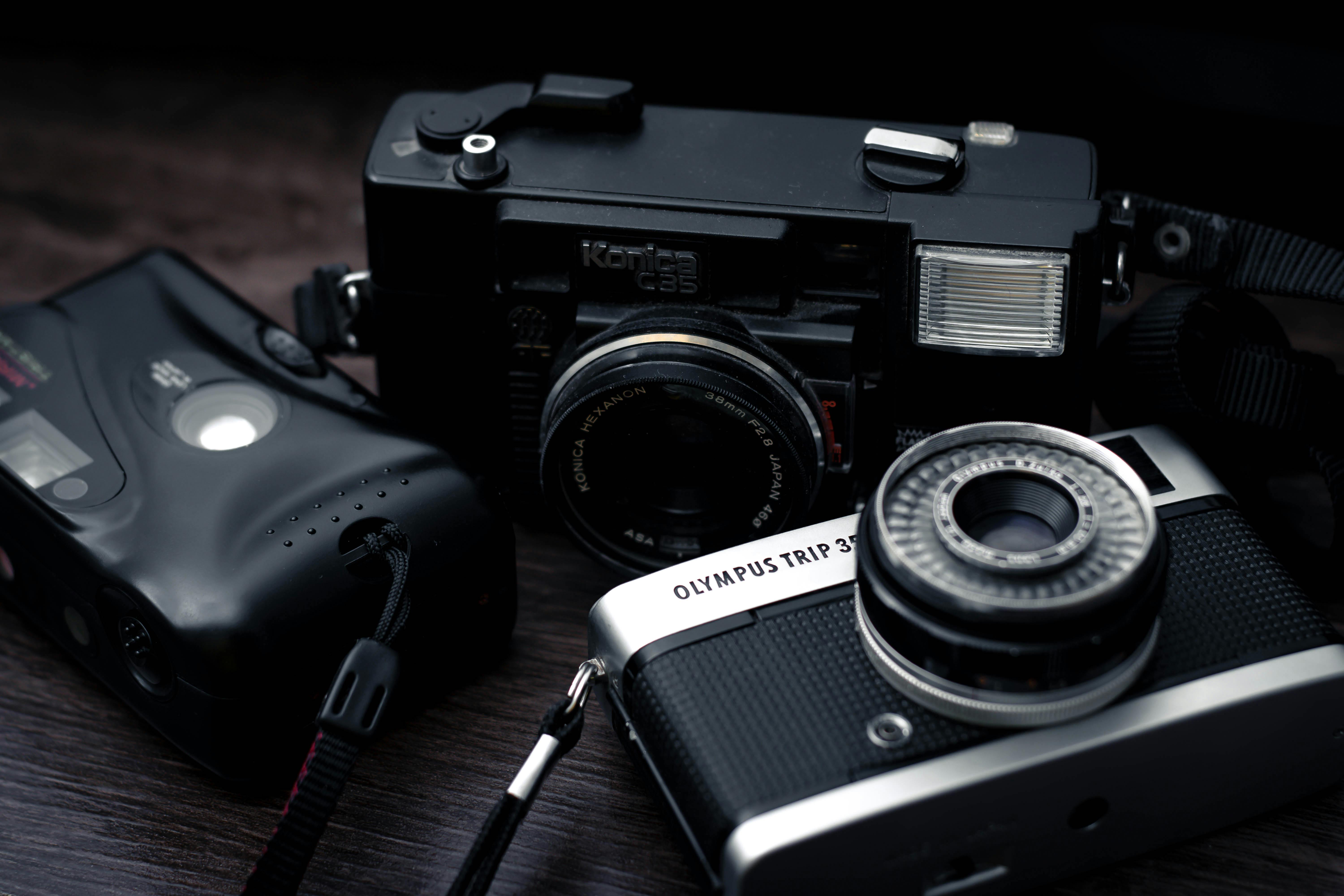
As a beginner in photography, understanding the different types of cameras is crucial for making an informed decision. The primary types include DSLR, mirrorless, and point-and-shoot cameras, each catering to different needs and preferences.
DSLR Cameras
DSLR (Digital Single-Lens Reflex) cameras are popular among beginners due to their versatility and image quality. They offer interchangeable lenses and manual controls, making them ideal for learning photography fundamentals.
Mirrorless Cameras
Mirrorless cameras are another excellent option, offering a more compact design compared to DSLRs while maintaining high image quality. They also feature interchangeable lenses and advanced autofocus systems.
Point-and-Shoot Options
Point-and-shoot cameras are compact and user-friendly, perfect for casual photography. They are often more affordable and easier to use than DSLRs and mirrorless cameras.
| Camera Type | Key Features | Ideal For |
| DSLR | Interchangeable lenses, manual controls | Learning photography fundamentals |
| Mirrorless | Compact design, advanced autofocus | Travel and everyday photography |
| Point-and-Shoot | Compact, user-friendly, affordable | Casual, everyday snapshots |
Choosing the best camera for beginners involves considering these types and their features. Whether you prioritize image quality, ease of use, or portability, there’s a camera type that suits your needs.
Best DSLR Starter Cameras
The world of DSLR cameras is vast, but there are a few models that stand out as ideal for starters. When beginning your photography journey, it’s crucial to choose a camera that is both easy to use and capable of producing high-quality images.
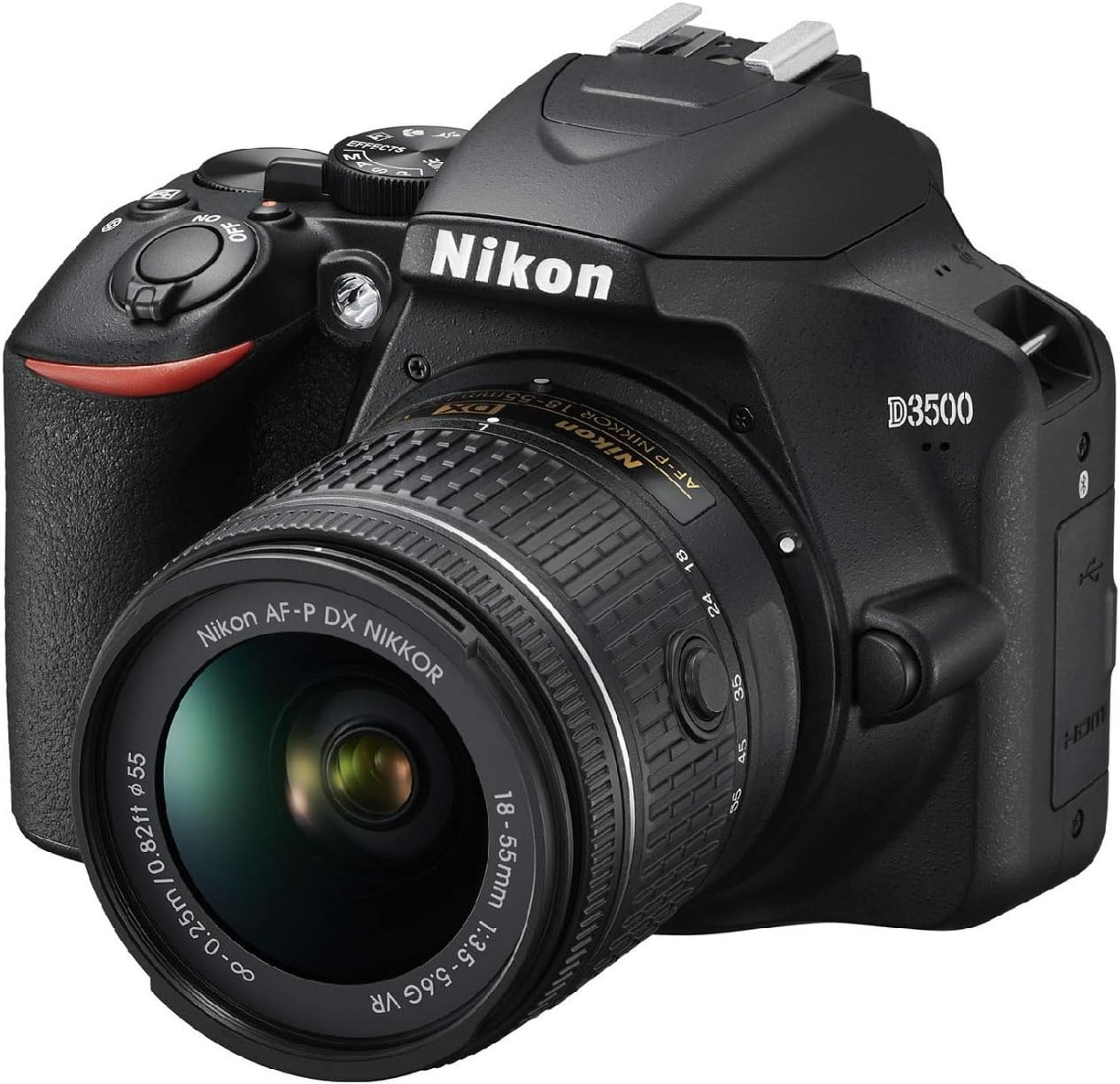
Nikon D3500 W/ AF-P DX NIKKOR 18-55mm f/3.5-5.6G VR Black
Nikon D3500
Overview
The Nikon D3500 is a popular choice among beginners due to its user-friendly interface and excellent image quality. It’s an entry-level DSLR that doesn’t compromise on features.
Pros
- Easy to use with a guide mode
- Excellent image quality
- Long battery life
Cons
- No 4K video recording
- Limited manual controls
Features
The Nikon D3500 features a 24.2MP APS-C sensor, 11-point autofocus, and can shoot up to 5fps. It also includes Bluetooth connectivity for easy image transfer.

Canon EOS Rebel T7
Overview
The Canon EOS Rebel T7 is another highly regarded DSLR for beginners. It offers a good balance between ease of use and advanced features.
Pros
- Good image quality
- Easy-to-use interface
- Built-in Wi-Fi for image transfer
Cons
- Not as feature-rich as some other models
- The kit lens is not the best
Features
The Canon EOS Rebel T7 features a 24.1MP APS-C sensor, 9-point autofocus, and can shoot up to 3fps. It also includes Scene Intelligent Auto mode for beginners.

PENTAX KF APS-C Digital SLR Camera 18-55 WR kit with Dustproof, Weather-Resistant and Vari-Angle LCD Monitor, Black
Pentax K-70
Overview
The Pentax K-70 is a versatile DSLR that is weather-sealed, making it ideal for outdoor photography. It’s also known for its excellent image quality and robust feature set.
Pros
- Weather-sealed body
- Excellent image quality
- In-body image stabilization
Cons
- More expensive than some other entry-level DSLRs
- The kit lens is not as sharp as some other lenses
Features
The Pentax K-70 features a 24.2MP APS-C sensor, 11-point autofocus, and can shoot up to 6fps. It also includes in-body image stabilization and weather-sealing.

Canon EOS Rebel SL3
Overview
The Canon EOS Rebel SL3 is a compact and feature-rich DSLR ideal for beginners. It offers a vari-angle touchscreen LCD and 4K video capabilities.
Pros
- Compact and lightweight
- Vari-angle touchscreen LCD
- 4K video recording
Cons
- Battery life could be better
- No headphone jack
Features
The Canon EOS Rebel SL3 features a 24.1MP APS-C sensor, 9-point autofocus, and can shoot up to 5fps. It also includes 4K video recording and a vari-angle touchscreen LCD.
| Camera Model | Sensor Resolution | Autofocus Points | Video Recording |
| Nikon D3500 | 24.2MP | 11 | 1080p |
| Canon EOS Rebel T7 | 24.1MP | 9 | 1080p |
| Pentax K-70 | 24.2MP | 11 | 1080p |
| Canon EOS Rebel SL3 | 24.1MP | 9 | 4K |
Top Mirrorless Cameras for Beginners
The world of mirrorless cameras offers a plethora of options for beginners, making it easier to start your photography journey. With their compact design and advanced features, mirrorless cameras have become a popular choice among new photographers. In this section, we will explore some of the top mirrorless cameras suitable for beginners.

Sony Alpha a6000 Mirrorless Digital Camera 24.3MP SLR Camera with 3.0-Inch LCD (Black) w/16-50mm Power Zoom Lens
Sony Alpha a6000
Overview
The Sony Alpha a6000 is a highly regarded mirrorless camera among beginners and professionals alike. It boasts a 24.2-megapixel APS-C sensor and fast autofocus, making it ideal for capturing high-quality images.
Pros
- Fast autofocus with 11fps continuous shooting
- High-quality 24.2-megapixel APS-C sensor
- Compact and lightweight design
Cons
- No 4K video recording
- Limited battery life
Features
The Sony Alpha a6000 features a tiltable LCD screen and a robust autofocus system with 179 phase-detection points. It also includes built-in Wi-Fi for easy image transfer.
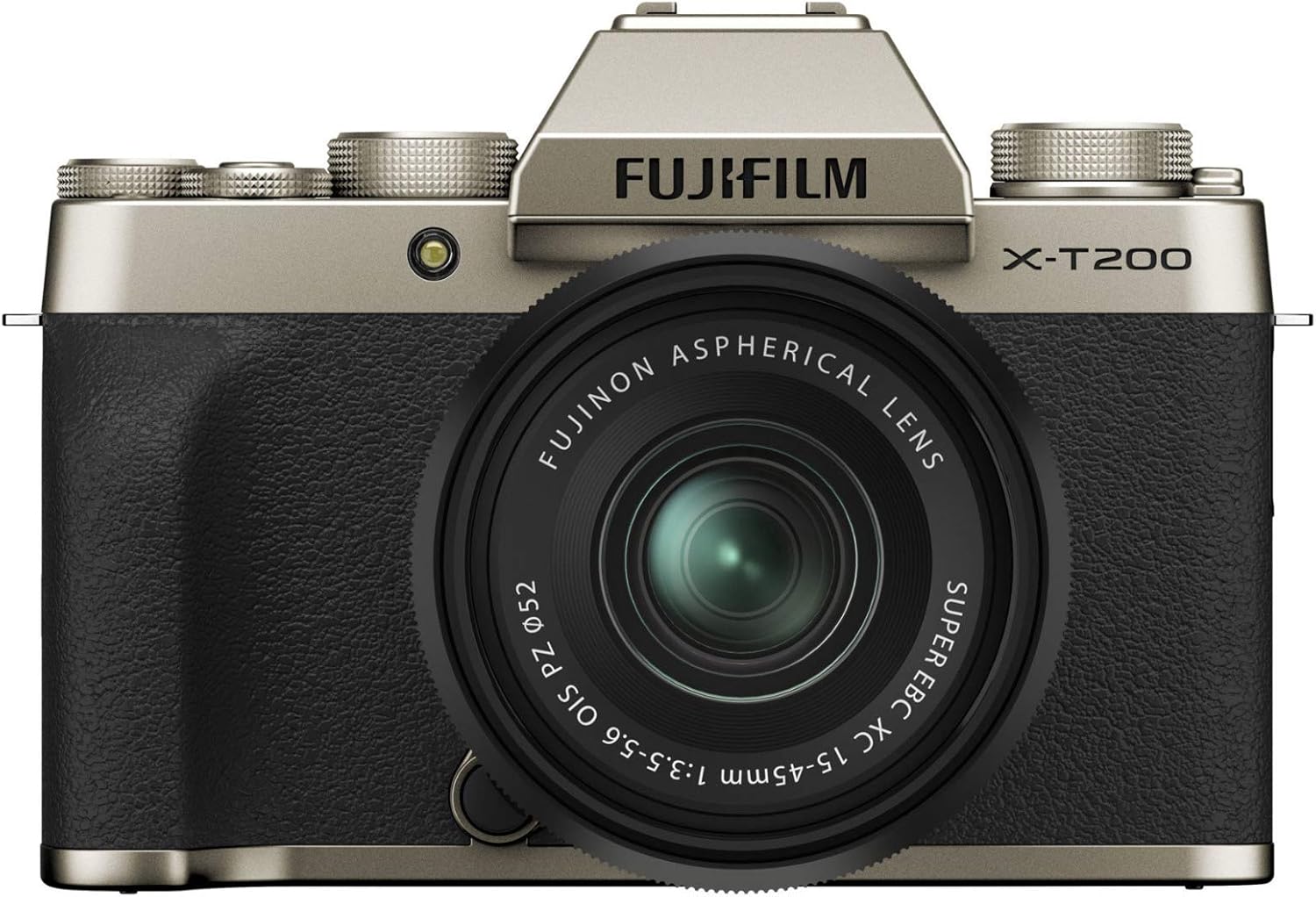
Fujifilm X-T200
Overview
The Fujifilm X-T200 is another excellent option for beginners, offering a 24.2-megapixel APS-C sensor and 4K video capabilities. Its vari-angle touchscreen LCD and enhanced autofocus make it a versatile tool.
Pros
- Vari-angle touchscreen LCD
- Excellent autofocus performance
- 4K video recording at 30fps
Cons
- Battery life could be better
- No weather sealing
Features
The Fujifilm X-T200 includes a range of features such as Bluetooth and Wi-Fi connectivity, and a hybrid autofocus system. It also has a dedicated film simulation mode.

Olympus OM-D E-M10 Mark IV
Overview
The Olympus OM-D E-M10 Mark IV is a feature-rich mirrorless camera ideal for beginners. It offers a 20.3-megapixel Micro Four Thirds sensor and 4K video recording.
Pros
- In-body image stabilization
- Compact and lightweight design
- 4K video at 30fps
Cons
- No weather sealing
- Battery life could be improved
Features
The Olympus OM-D E-M10 Mark IV includes a tilting touchscreen LCD and a 121-point contrast-detection autofocus system. It also features built-in Wi-Fi and Bluetooth connectivity.
Budget-Friendly Starter Camera for Photography Under $500
You don’t need to spend a fortune to get a great starter camera for photography. Several excellent options are available for under $500, offering a range of features that can help beginners develop their skills.

Canon PowerShot SX740 HS
Overview
The Canon PowerShot SX740 HS is a compact and versatile camera that is perfect for travel and everyday photography. It features a 40x optical zoom lens, making it ideal for capturing distant subjects.
Pros
- Long Zoom Range: The 40x optical zoom allows for detailed shots from a distance.
- Compact Design: Its small size makes it easy to carry around.
- 4K Video: It can record high-quality 4K video.
Cons
- Limited Manual Controls: Beginners who want to learn manual photography skills might find the controls limiting.
- No RAW Image Support: It doesn’t support RAW image capture, which can be a drawback for some enthusiasts.
Features
The Canon PowerShot SX740 HS includes features like built-in Wi-Fi for easy image transfer, a 3-inch LCD screen, and image stabilization to reduce blur.

Panasonic LUMIX DC-ZS70S, 20.3 Megapixel, 4K Digital Camera, Touch Enabled 3-inch 180 Degree Flip-front Display, 30X LEICA DC VARIO-ELMAR Lens, WiFi (Silver)
Panasonic Lumix DMC-ZS70S
Overview
The Panasonic Lumix DMC-ZS70S is another excellent travel camera with a 30x optical zoom lens. It offers 4K video recording and has a built-in electronic viewfinder, making it versatile for different shooting styles.
Pros
- 4K Video Capability: It records high-quality video.
- Electronic Viewfinder: The built-in EVF helps with composing shots in bright light.
- Long Battery Life: It has a long-lasting battery, ideal for travel.
Cons
- Average Low-Light Performance: Its low-light performance is not as strong as some other models.
- No External Microphone Input: This can be a limitation for videographers.
Features
The Panasonic Lumix DMC-ZS70S features a 20.3MP sensor, 30x optical zoom, and 4K photo mode, allowing for creative flexibility.

Sony DSCWX500/B Digital Camera with 3-Inch LCD (Black)
Sony Cyber-shot DSC-WX500
Overview
The Sony Cyber-shot DSC-WX500 is a compact camera with a 30x optical zoom lens and a pop-up electronic viewfinder. It’s designed for ease of use and travel convenience.
Pros
- Pop-Up Electronic Viewfinder: The EVF pops up when needed, providing a clear view.
- Tilt-able LCD: The LCD screen can be tilted upwards, making it useful for vlogging.
- Fast Autofocus: It has quick and accurate autofocus.
Cons
- Short Battery Life: The battery life is relatively short compared to other models.
- No 4K Video at 60fps: It records 4K video, but not at 60fps.
Features
The Sony Cyber-shot DSC-WX500 includes features like built-in Wi-Fi, NFC for easy pairing, and an 18.2MP sensor, making it a solid choice for beginners.
Best Nikon Starter Cameras for Photography Enthusiasts
Nikon offers a range of excellent starter cameras that cater to the needs of photography enthusiasts. Whether you’re looking to upgrade from a smartphone camera or just starting out, Nikon’s entry-level cameras provide a great balance between quality and affordability.

Nikon Z50
The Nikon Z50 is a compact and powerful mirrorless camera, ideal for those who want high-quality images without the bulk.
Pros
Compact Design, Fast Autofocus, and 4K Video Capability make it a versatile tool.
Cons
Some users may find the limited battery life and lack of in-body stabilization to be drawbacks.
Features
It features a 20.9MP APS-C sensor, 11fps burst mode, and extensive lens compatibility.

Nikon D5600
Overview
The Nikon D5600 is a feature-rich DSLR that offers excellent image quality and a user-friendly interface.
Pros
24.2MP Sensor, Full HD Video, and Bluetooth Connectivity are some of its key advantages.
Cons
No 4K video and limited low-light performance are notable cons.
Features
It boasts a vari-angle touchscreen LCD and built-in Wi-Fi.

Nikon Z fc
Overview
The Nikon Z fc combines retro style with modern functionality, offering a unique photography experience.
Pros
Retro Design, 20.9MP APS-C Sensor, and 4K Video are its standout features.
Cons
Small grip and no in-body stabilization might be issues for some users.
Features
It includes a tilting touchscreen and compatibility with Nikon’s Z-mount lenses.
Best Cameras for Kids Interested in Photography
Photography can be a fun and creative hobby for kids, and the right camera can make all the difference. When choosing a camera for kids, it’s essential to consider durability, ease of use, and features that can enhance their learning experience.

Polaroid Snap
Overview
The Polaroid Snap is a compact, instant camera that allows kids to print their photos immediately. It’s a great introduction to photography and instant gratification.
Pros
Instant Printing: Kids can print their photos instantly, making it a fun experience.
Compact Design: It’s small and easy to carry around.
Cons
The film can be expensive, and the quality might not be as high as that of digital cameras.
Features
The Polaroid Snap comes with a rechargeable battery and can store photos digitally as well.
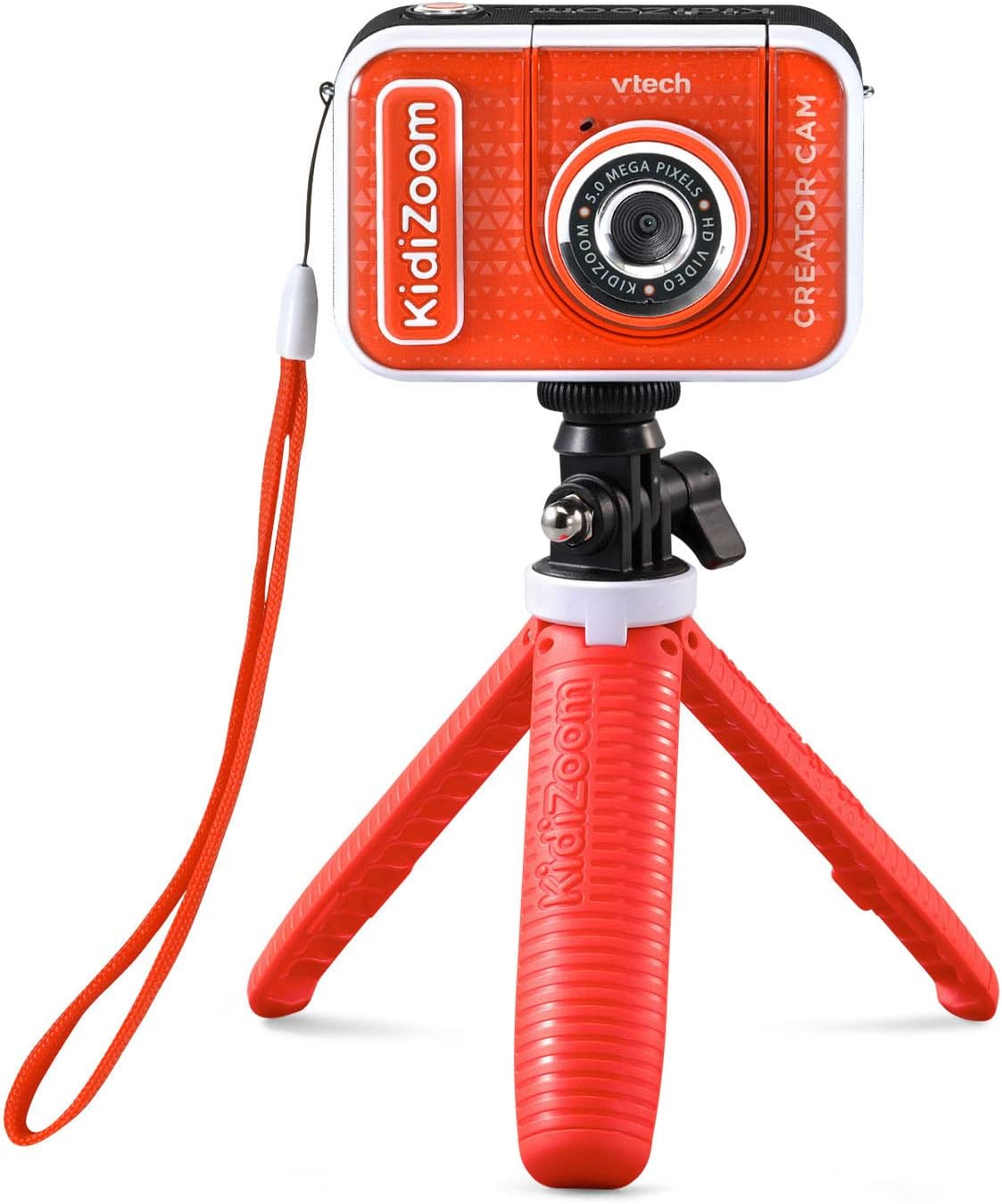
VTech KidiZoom
Overview
The VTech KidiZoom is a kid-friendly camera that is durable and easy to use, making it perfect for young photographers.
Pros
Durable: It’s designed to withstand rough handling.
Fun Features: Includes various effects and games to keep kids engaged.
Cons
The image quality might not be as good as that of more advanced cameras.
Features
It includes a variety of fun features like photo editing and games.

Fujifilm Instax Mini 11
Overview
The Fujifilm Instax Mini 11 is another instant camera that’s easy to use and produces high-quality instant photos.
Pros
High-Quality Prints: The instant photos are of good quality.
Automatic Exposure: It adjusts to the lighting conditions automatically.
Cons
The cost of film can add up.
Features
It has a selfie mode and is very easy to operate.

Nikon Coolpix W150
Overview
The Nikon Coolpix W150 is a rugged camera that’s waterproof, shockproof, and suitable for kids.
Pros
Rugged Design: It’s built to withstand drops and water exposure.
Easy to Use: A simple interface makes it accessible for kids.
Cons
Image quality might not be as high as that of more advanced models.
Features
It includes video recording and is shockproof up to 1.8 meters.
Starter Cameras for Different Photography Styles
The world of photography is vast, with different styles requiring unique camera capabilities, and this section will guide you through the best starter cameras for each. Whether you’re into portrait, landscape, street, or wildlife photography, having the right equipment is crucial for capturing stunning images.

Best for Portrait Photography: Canon EOS 250D
Overview
The Canon EOS 250D is an excellent choice for portrait photography, offering a 24.1MP APS-C sensor and a vari-angle touchscreen LCD.
Pros
High-quality images with a shallow depth of field and an easy-to-use interface make it ideal for beginners.
Cons
While it lacks some advanced features, it’s a great starting point. Some users might find the limited manual controls a drawback.
Features
It includes a 4K video capability and a Dual Pixel AF system for smooth autofocus.
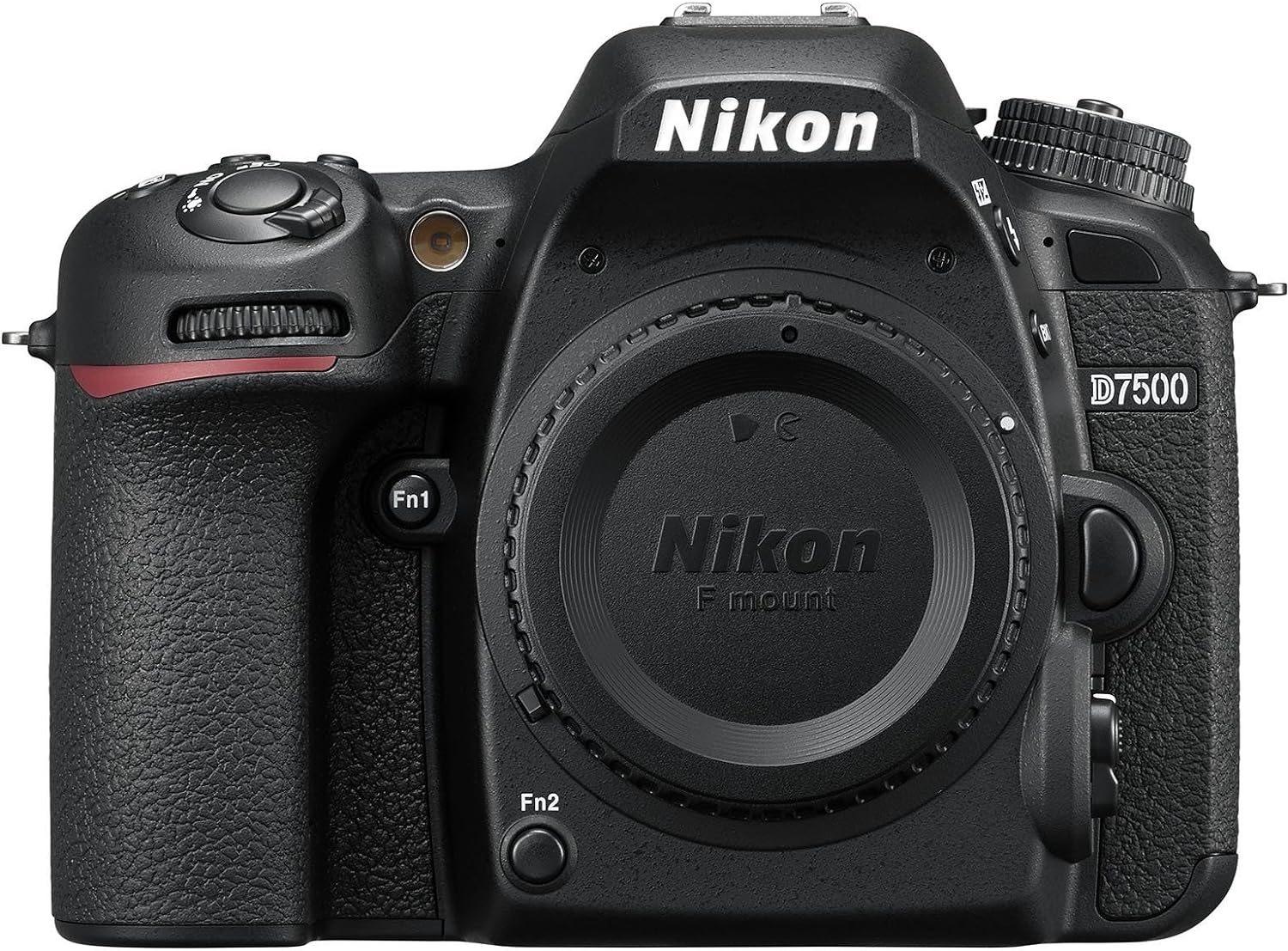
Best for Landscape Photography: Nikon D7500
Overview
The Nikon D7500 is a powerful camera for landscape photography, featuring a 20.9MP APS-C sensor and 4K video recording.
Pros
Excellent image quality and a robust feature set make it suitable for capturing detailed landscapes.
Cons
It’s relatively expensive and lacks built-in image stabilization.
Features
It boasts a tilting touchscreen LCD and impressive autofocus capabilities.

Best for Wildlife Photography: Panasonic Lumix FZ80
Overview
The Panasonic Lumix FZ80 is a versatile camera for wildlife photography, offering a 60x zoom lens and 4K video.
Pros
Impressive zoom range and good image quality make it suitable for capturing wildlife.
Cons
The small sensor size can affect image quality in low light.
Features
It includes a built-in electronic viewfinder and RAW image capture.
Choosing the right camera for your preferred photography style can significantly enhance your skills and overall experience. The cameras listed above are excellent starting points for beginners looking to explore different genres.
Smartphone Alternatives: When Your Phone Is Enough
The camera on your smartphone is more powerful than ever, making it a potential starter ‘camera’ for photography enthusiasts. With high-quality cameras and advanced features, smartphones can be a viable alternative to dedicated cameras for beginners.
iPhone Photography Capabilities
iPhones have revolutionized smartphone photography with their advanced camera systems. Features like Night mode, Portrait mode, and advanced image processing make them highly capable. For instance, the latest iPhone models offer:
- High-resolution sensors
- Advanced image stabilization
- Enhanced low-light performance
As John Smith, a renowned photographer, once said, The iPhone has taken mobile photography to new heights, offering capabilities that rival many dedicated cameras.
Android Options for Photography Beginners
Android smartphones also offer impressive camera capabilities, with brands like Samsung, Google, and OnePlus leading the way. Features such as Super Resolution, optical zoom, and AI-enhanced photography modes provide a robust photography experience. A comparison of some top Android models is shown below:
| Model | Camera Resolution | Optical Zoom |
| Samsung S23 | 50MP | 3x |
| Google Pixel 7 | 48MP | 2x |
| OnePlus 11 | 50MP | 3x |
For photography beginners, these smartphone alternatives offer a convenient and high-quality way to start capturing moments without the need for a dedicated camera.
Essential Accessories for Your Starter Camera
Investing in the right accessories can significantly enhance your photography experience with your starter camera. While the camera itself is crucial, additional accessories can improve your skills and the quality of your photos.
Must-Have Lenses for Beginners
For those starting out, a versatile lens can make a significant difference. A standard zoom lens (around 18-55mm) is often included with starter cameras and is great for general photography. Consider adding a prime lens (like a 50mm) for better image quality and to improve your composition skills.
Memory Cards and Storage Solutions
Having enough storage is crucial for photography. Look for high-quality memory cards with sufficient capacity (at least 64GB) and speed (Class 10 or higher) to store your photos. Additionally, consider a portable storage solution like an external hard drive to back up your images.
Tripods and Stabilization Tools
A tripod is essential for low-light photography, long exposures, and reducing camera shake. Look for a sturdy, adjustable tripod that can support your camera’s weight. For added stability, consider a remote shutter release or the camera’s self-timer.
From Beginner to Pro: Your Photography Journey Starts Here
Embarking on a photography journey can be both exciting and intimidating, especially for those new to the world of capturing moments. The right starter camera for photography is your first step towards developing your skills. Whether you’re drawn to the simplicity of a point-and-shoot or the versatility of a DSLR or mirrorless camera, the key is to start with the best camera for beginners that fits your needs and budget.
As you begin, remember that practice is crucial. The more you use your camera, the more comfortable you’ll become with its settings and capabilities. Don’t be afraid to experiment and try different modes and techniques. Continuous learning is also vital; online tutorials, workshops, and photography communities can provide valuable insights and tips to improve your craft.
The journey from beginner to pro is a gradual one, and it starts with the decision to pick up a camera. With the right starter camera for photography, you’re not just buying a device-you’re investing in a tool that will help you tell stories, capture beauty, and preserve memories. So, take the first step, and let your photography journey unfold.
You Might Also Enjoy: Newborn Photography Tips for Capturing Precious Baby Moments