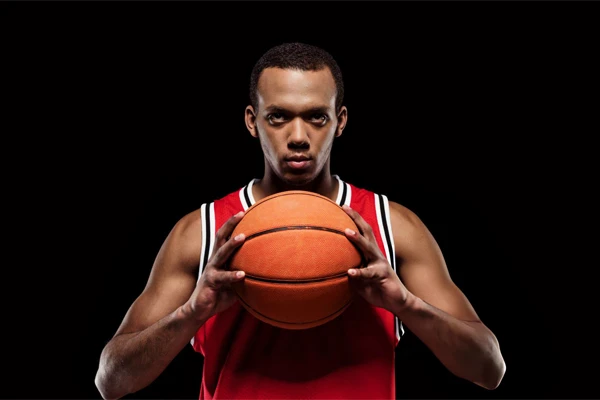
Every year, millions of people worldwide are drawn to the excitement of competitive sports. Behind the scenes, a special kind of artist works hard. They capture the intensity and drama of these moments. A single photo can show the emotion of winning or losing, freezing time in a way that tells a story.
The art of capturing the perfect moment needs skill, patience, and a deep game understanding. Whether it’s the split-second action of a football game or the intensity of a tennis match, sports photography brings the excitement to life.
As we explore sports photography, we’ll look at the technical, creative, and professional sides. These aspects make this genre so compelling.
Table of Contents
The Thrill and Challenge of Action Capture
Sports photography is both thrilling and challenging. It needs technical skill and creative vision. Photographers must have the right gear and know how to catch the best moments.
Why Sports Photography Stands Apart
Sports photography is different because it’s fast and dynamic. Photographers face many conditions, from bright outdoors to dark indoors. The best camera for sports photography is key to getting great shots.
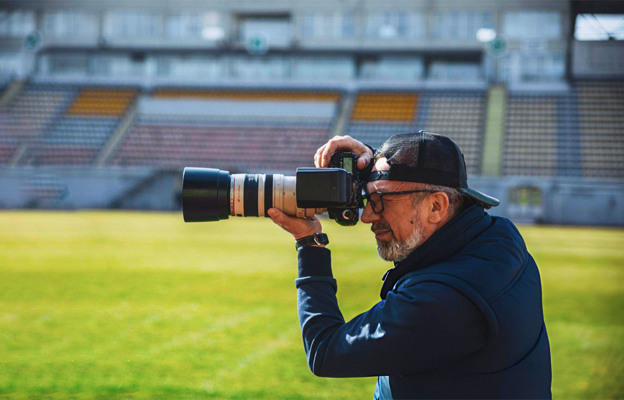
The Technical and Creative Demands
Mastering camera settings like shutter speed, aperture, and ISO is crucial. Photographers also need to think creatively about composition and anticipate action.
| Technical Aspect | Creative Aspect |
| Shutter Speed | Framing the Subject |
| Aperture | Anticipating Action |
| ISO Management | Composition |
Essential Equipment for Sports Photography
For sports photography, the right equipment is key. It can turn a good shot into a great one. Photographers need gear that’s fast, reliable, and makes high-quality images.
Camera Bodies: Speed and Performance Features
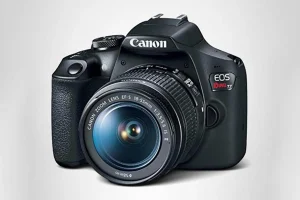
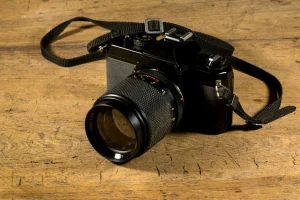
The camera body is the core of a sports photographer’s kit. Modern DSLR and mirrorless cameras have fast autofocus and high burst modes. They also perform well in low light.
For example, the Canon EOS-1D X Mark III and Sony Alpha a9 II are top choices. They have advanced autofocus systems and high-speed continuous shooting.
| Camera Model | Autofocus Points | Burst Mode (fps) |
| Canon EOS-1D X Mark III | 191 | 20 |
| Sony Alpha a9 II | 693 | 20 |
Support Equipment: Monopods, Bags, and Accessories
Support equipment is also vital in sports photography. A strong monopod keeps the camera steady, making images sharper. Protective camera bags and accessory cases keep gear safe.
Photographers often use telephoto lenses to capture action from afar. They have wide apertures for better shots.
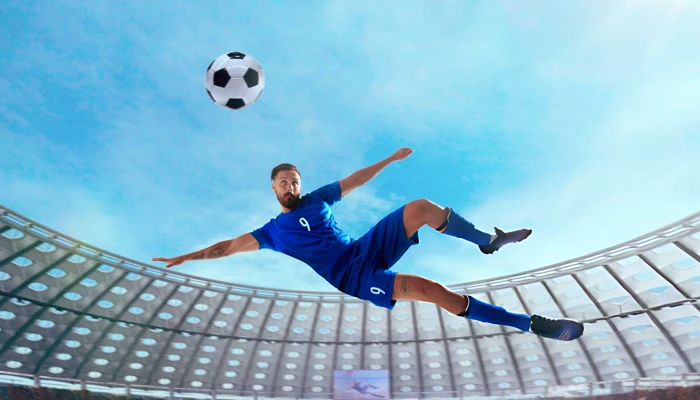
As a sports photographer says, The right support equipment is as important as the camera. Good gear lets photographers focus on the action, not their equipment.
The best camera is the one you have with you, but the right accessories can take your sports photography to the next level.
Best Cameras for Sports Photography
Sports photography needs a camera that’s fast, high-quality, and tough. Whether it’s a football game or a gymnast’s performance, the right camera is key.
Professional DSLR Options
Professional DSLR cameras are top picks for sports photographers. They’re reliable and perform well. Canon and Nikon lead in this field.
Canon and Nikon Flagships
Canon’s EOS-1D X Mark III and Nikon’s D6 are top DSLR models. They offer excellent autofocus and can shoot fast.
Weather Sealing and Durability Features
Both Canon and Nikon flagships have strong weather sealing. This keeps them safe from the weather, making them great for sports photography.
| Feature | Canon EOS-1D X Mark III | Nikon D6 |
| Continuous Shooting | 20 fps | 14 fps |
| Autofocus Points | 191 | 105 |
| Weather Sealing | Yes | Yes |
Mirrorless Systems for Action
Mirrorless cameras are gaining fans in sports photography. They’re known for their advanced features and small size. Sony and Canon are leading in this area.
Sony and Canon Mirrorless Advantages
Sony’s Alpha series and Canon’s EOS R line have fast autofocus and quick shooting. They’re perfect for fast action.
Battery Life and Performance Considerations
Even with their benefits, mirrorless cameras have a battery life issue. Sony and Canon have worked hard to improve this. Now, some models have long battery life and efficient use.
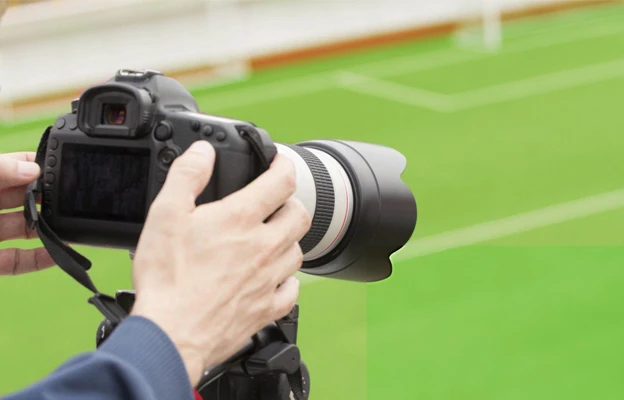
Best Canon Cameras for Sports Photography
Canon cameras are known for their top-notch performance in sports photography. They offer both professional and enthusiast-level models. Whether you’re capturing the action on the field or the intensity on the athletes’ faces, Canon’s range has something for everyone.
Professional Canon Models
The EOS-1D X Mark III and EOS R3 are Canon’s top cameras for professional sports photographers. The EOS-1D X Mark III has a 20.1MP full-frame sensor and can shoot up to 20 fps. It also has 191 points of autofocus.
The EOS R3 has a 24.1MP back-illuminated stacked sensor and can shoot at up to 30 fps. Both cameras are built for speed and reliability, making them perfect for fast-paced sports action.
Enthusiast Canon Options
For those who love sports photography but aren’t professionals, Canon has great options. The EOS R6 and EOS 90D are perfect for enthusiasts. The EOS R6 has a 20.1MP full-frame sensor and can shoot up to 20 fps.
The EOS 90D has a 32.5MP APS-C sensor and can shoot at 10 fps. These cameras offer great performance at a more affordable price, making sports photography more accessible.
Understanding Lenses for Sports Photography
The right lens is key in sports photography. It can mean the difference between capturing a moment and missing it. The lens affects the quality, clarity, and impact of your photos.
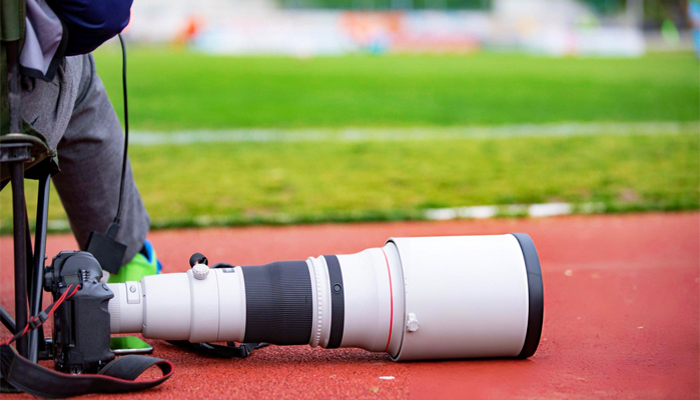
Focal Length Selection by Sport Type
The focal length you choose depends on the sport and your position. For sports like football or soccer, telephoto lenses (70-200mm or 100-400mm) work best from a distance. On the other hand, wider-angle lenses are better for sports like basketball or hockey, where the action is closer.
Fast Aperture Requirements
A fast aperture is vital for sharp, well-lit images in sports photography. Lenses with apertures like f/2.8 are standard. They let more light in and create a shallow depth of field, focusing on the athletes.
When picking a lens, think about both focal length and aperture. This ensures your photos capture the excitement and movement of the sport.
Best Lenses for Sports Photography
Sports photography needs lenses that can handle fast action and give top-notch images. The right lens makes a big difference in capturing the excitement and feelings of sports events.
Telephoto Zoom Workhorses
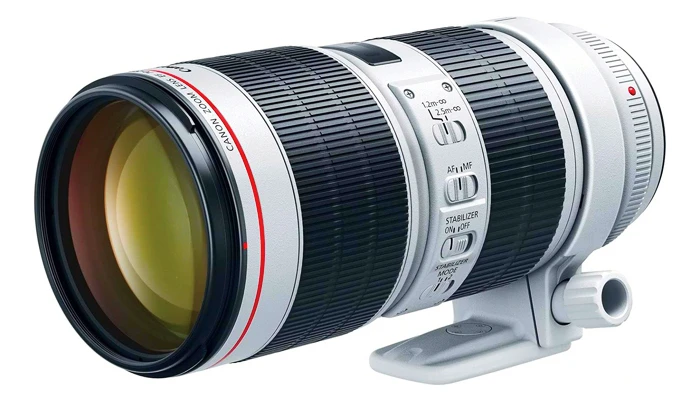
Telephoto zoom lenses, like the 70-200mm and 100-400mm, are key for many sports photographers. They let you shoot from far away without losing image quality.
Key Features:
- Versatile focal length range
- Fast aperture for better low-light performance
- Image stabilization to reduce camera shake
| Lens Model | Focal Length | Aperture | Image Stabilization |
| Canon EF 70-200mm f/2.8L IS III USM | 70-200mm | f/2.8 | Yes |
| Nikon AF-S Nikkor 70-200mm f/2.8E FL ED VR | 70-200mm | f/2.8 | Yes |
Super-Telephoto Options
For sports like golf or horse racing, super-telephoto lenses (300mm, 400mm, 600mm) are a must. They let you get up close from far away, keeping image quality high.
Benefits:
- Exceptional reach for distant subjects
- High image quality with minimal distortion
- Often feature advanced image stabilization
A good lens is like a good pair of eyes; it helps you see the world in a different way. –
Anonymous
When picking a lens for sports photography, think about the sport, the lighting, and your camera system.
Sport-Specific Lens Recommendations
Different sports need different lenses to capture the best moments. From football to basketball, the right lens makes a big difference. It helps capture the action and emotion of the event.
Best Lenses for Football Photography
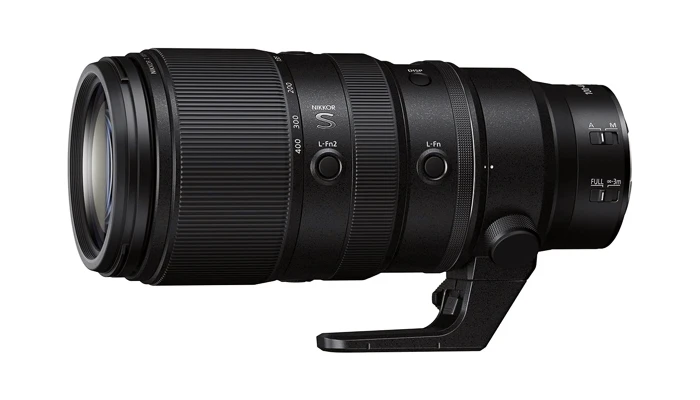
Football photography needs lenses with long focal lengths. This lets you capture the action from far away. Telephoto lenses like the 70-200mm f/2.8 or 100-400mm f/4.5-5.6 are perfect for this.
- The 70-200mm f/2.8 has a versatile range and a wide aperture for great low-light shots.
- The 100-400mm f/4.5-5.6 has a longer reach, ideal for capturing distant action.
Optimal Lenses for Basketball and Indoor Sports
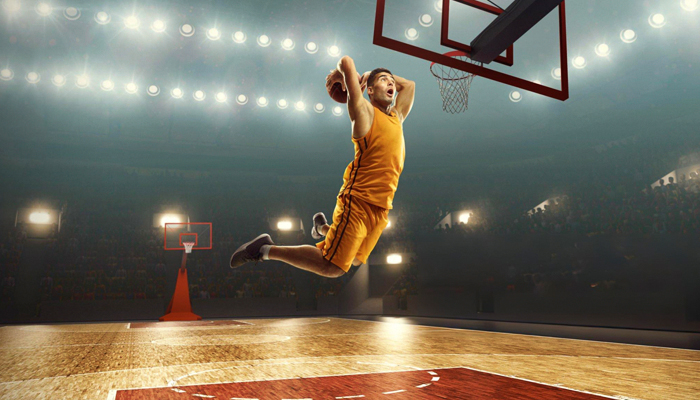
Basketball and indoor sports face unique challenges like low lighting and fast action. Fast prime lenses or zoom lenses with wide apertures are best for these sports.
- A 50mm or 85mm prime lens with a wide aperture (like f/1.4) works well in low light.
- A zoom lens with a wide aperture range, like the 24-70mm f/2.8, offers flexibility and good low-light performance.
Best Lenses for Sports Photography: Sony Systems
Choosing the right lens is key for sports photography with Sony cameras. Sony has a wide range of lenses, including the G Master series. These lenses help photographers capture top-notch images of fast sports action.
Sony G Master Telephoto Options
Sony’s G Master telephoto lenses are top-notch. The Sony FE 70-200mm f/2.8 GM OSS and Sony FE 100-400mm f/4.5-5.6 GM OSS are favorites for sports shots. They work well in tough lighting.
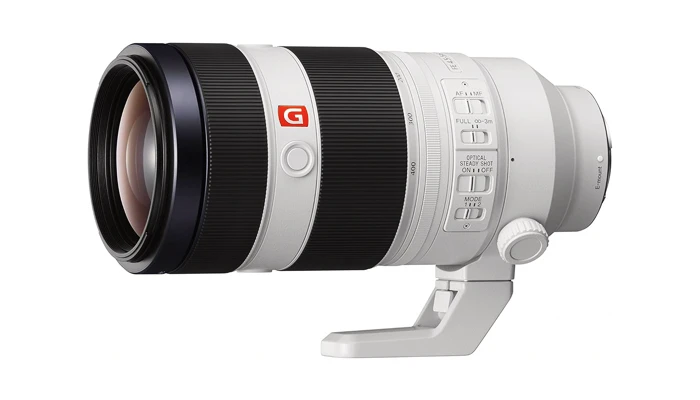
| Lens Model | Focal Length | Aperture | Image Stabilization |
| Sony FE 70-200mm f/2.8 GM OSS | 70-200mm | f/2.8 | Yes |
| Sony FE 100-400mm f/4.5-5.6 GM OSS | 100-400mm | f/4.5-5.6 | Yes |
Third-Party Alternatives for Sony Shooters
While Sony’s G Master lenses are great, Tamron and Sigma offer good alternatives. The Tamron 70-200mm f/2.8-4 and Sigma 120-600mm f/4.5-6.3 lenses are worth considering. They offer great value and performance.
Mastering Camera Settings for Action
Sports photography needs precision, and the right camera settings are key. To get stunning images, photographers must adjust their settings to freeze fast action.
Shutter Speed Techniques for Freezing Motion
For sharp images of moving subjects, the right shutter speed is crucial. A shutter speed of 1/1000th of a second is good for most sports. But, for very fast actions like car racing, speeds like 1/2000th or 1/4000th are better. Fast shutter speeds freeze motion, reducing blur and capturing action’s intensity.
Aperture for Sports Photography
Aperture is vital in sports photography, controlling depth of field and light. A wider aperture (lower f-stop number) isolates the subject, making images look professional. But the aperture choice depends on the sport and desired effect.
ISO Management in Challenging Lighting
ISO management is key in sports photography, under tough lighting. Keeping ISO low reduces noise and improves image quality. But, in low light, increasing ISO might be needed to freeze action. Modern cameras handle high ISOs better, but balance is still important.
Mastering these camera settings helps sports photographers capture compelling, high-quality images. These images show the excitement and drama of sports events.
Advanced Focus Techniques for Moving Subjects
To freeze the moment in sports photography, photographers must use advanced focus techniques. They need to understand their camera’s capabilities. This helps capture sharp images of athletes in motion.
Autofocus Modes and Custom Settings
Modern cameras have various autofocus modes for sports photography. Continuous Autofocus (AF-C) is great because it keeps adjusting focus as the subject moves. Custom settings let photographers set their cameras for the best performance in different situations.
Back-Button Focus Advantages
Back-button focus separates autofocus from the shutter release. This gives greater control over focusing. It helps photographers track subjects better and avoid focus errors.
Subject Tracking Across Different Systems
Different camera systems, like Canon, Nikon, and Sony, have advanced subject tracking. Knowing how to use these features is key to sharp images. For example, Sony’s Eye AF and Canon’s AI Servo AF track moving subjects with high precision.
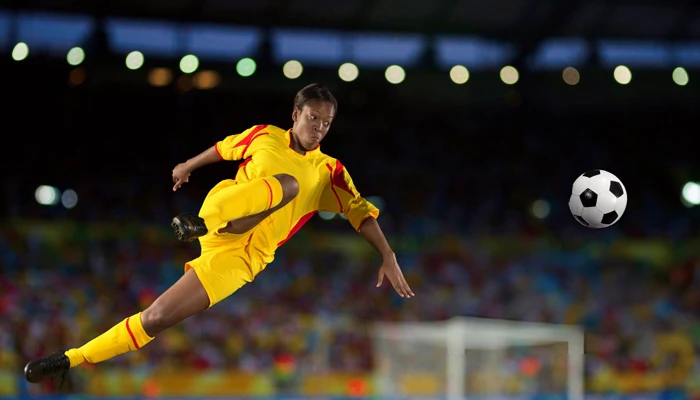
By mastering these advanced focus techniques, sports photographers can improve their image quality. They can capture the thrill and action of sports with clarity and precision.
The Art of Sports Photography Composition
In sports photography, the composition is key. It tells a story beyond the game. It captures the moment, emotion, and action in a way that grabs the viewer.
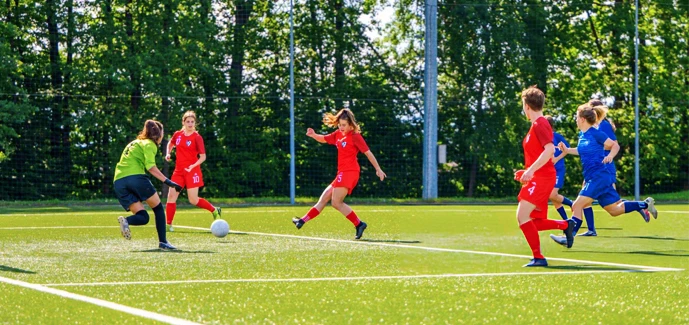
Framing Dynamic Action
Framing dynamic action needs a deep understanding of the sport. It’s about knowing its rhythms and peak moments. You must position yourself to show the athlete’s movement, conveying power, grace, or tension.
Anticipating Peak Moments
Anticipating peak moments is crucial. It means knowing the game well enough to predict significant events. This could be a goal scored or a record broken.
Including Environmental Context
Including environmental context adds depth. It’s not just about the athlete or action. It’s about the surroundings, crowd, and atmosphere. Together, they tell a fuller story.
| Composition Technique | Description | Example |
| Framing | Using natural or man-made features to frame the subject. | Capturing an athlete running through a doorway or archway. |
| Leading Lines | Using lines or patterns to lead the viewer’s eye to the subject. | A track or road leading to the athlete. |
| Symmetry | Using symmetry to create a sense of order or balance. | Capturing a mirrored reflection in water or a symmetrical pattern in the architecture. |
Mastering these composition techniques can elevate sports photography. It tells more compelling stories that connect with viewers.
Conquering Lighting Challenges
Good sports photography needs more than a camera. It also requires understanding different lighting conditions. Whether in a bright stadium or a dim arena, lighting greatly impacts your photos.
Indoor Arena Lighting Strategies
Indoor sports venues have unique lighting issues. The light can be uneven, with bright spots and dark areas. To tackle this, use fast lenses to let more light in. Adjust your camera settings to handle the changing light levels.
For example, a lens with a wide aperture like f/2.8 helps in low light. It makes your images clearer.
Dealing with Mixed Lighting Conditions
Mixed lighting, where natural and artificial light mix, is hard to manage. The trick is to balance the white balance settings on your camera. Match the dominant light source, or use auto white balance if you can.
Also, shooting in RAW format lets you adjust for mixed lighting later. This flexibility is key in post-processing.
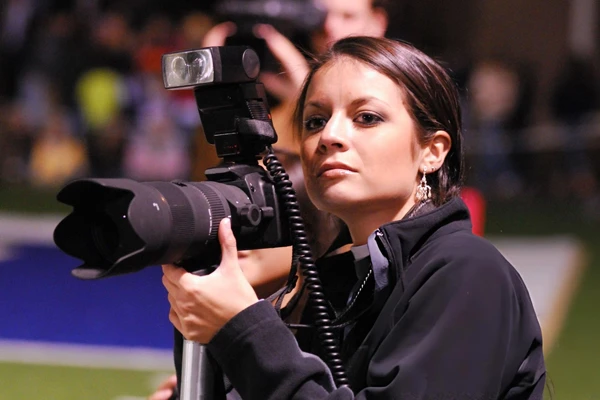
Using Flash in Sports Photography
Flash in sports photography faces challenges like distance and harsh shadows. But external flash units with high-speed sync can freeze motion and add depth. It’s crucial to adjust flash power and direction to fit the existing light.
By mastering these lighting challenges, sports photographers can improve their work. They can capture the excitement of sports more effectively.
Efficient Post-Processing Workflows
In the fast world of sports photography, quick post-processing is key. Photographers must balance image quality with speed to please their clients.
Culling and Selection Techniques
Culling starts with picking the best images from many. Effective culling techniques include reviewing images in order and using flags or ratings. It’s also important to compare images to pick the sharpest and most compelling ones.

Key Adjustments for Impact and Clarity
After picking the best images, making key adjustments can boost their impact and clarity. This includes adjusting exposure and contrast for a more dynamic look. Sharpening and noise reduction also help make images more appealing.
Batch Processing for Deadline Delivery
Batch processing saves time by applying edits to many images at once. It’s great for sports photography with lots of images. By creating presets or using actions in editing software, photographers can work faster. This helps them meet tight deadlines.
How to Become a Sports Photographer
Starting a career in sports photography needs technical skill, creative vision, and planning. You must face the challenge of taking great photos in fast environments.

Building a Compelling Portfolio
A good portfolio is key to showing your skills to clients. It should have a mix of photos from different sports and situations. Include:
- Action shots that show the game’s intensity
- Emotive portraits of athletes
- Unique views that tell a story
Keep updating your portfolio with your best work to get more chances.
Gaining Access and Credentials
Getting into sports events is important for your portfolio and reputation. Start by:
- Covering local sports events
- Networking with other photographers and sports pros
- Applying for press credentials through official channels
Building relationships with teams, leagues, and event organizers can open more doors.
Education and Learning Resources
Keep learning to stay competitive in sports photography. Use:
- Online tutorials and workshops
- Photography courses on sports and action
- Industry publications and blogs
Learning new techniques and tech will improve your skills and keep you ahead.
Ethics and Etiquette in the Field
Sports photography is not just about taking pictures. It also involves understanding ethics. Photographers must respect athletes and the places they shoot in.
Respecting Athletes, Officials, and Venues
Photographers need to act professionally. They should respect athletes’ privacy and personal space. It’s important to:
- Keep a safe distance to not get in the way
- Follow venue rules and restrictions
- Respect athletes during their vulnerable moments
This way, photographers can earn the trust of athletes, officials, and venue managers. Trust is key to getting access to the best shooting spots.
Understanding Image Rights and Usage
It’s also crucial to know about image rights. This includes:
- Understanding copyright laws for sports photography
- Knowing the terms of use for images, including commercial use
- Knowing when model releases are needed
By understanding these, photographers can work legally. This protects their work and reputation.
Capturing the Spirit Beyond the Action
Sports photography is more than just capturing the action. It’s about showing the heart and soul of the game. Photographers who can capture these moments are truly special.
The dedication and passion of athletes shine through in sports photography. It tells a story that goes beyond the score. It highlights the moments that show the human spirit.
To capture the essence of sports, photographers need to pay attention to the small details. They must understand the sport, its players, and the setting. With technical skill and an eye for the human side, sports photography becomes a powerful way to tell stories.
You Might Also Enjoy: US Photography Jobs Service Directory-Past Listings